Perimenopause
Periods changing, symptoms starting. Strength exercise is something you can start now.
Text size
A calm, guided strength plan for your iPhone. Two sessions a week, at the gym or at home, one exercise at a time, with the weights worked out for you.
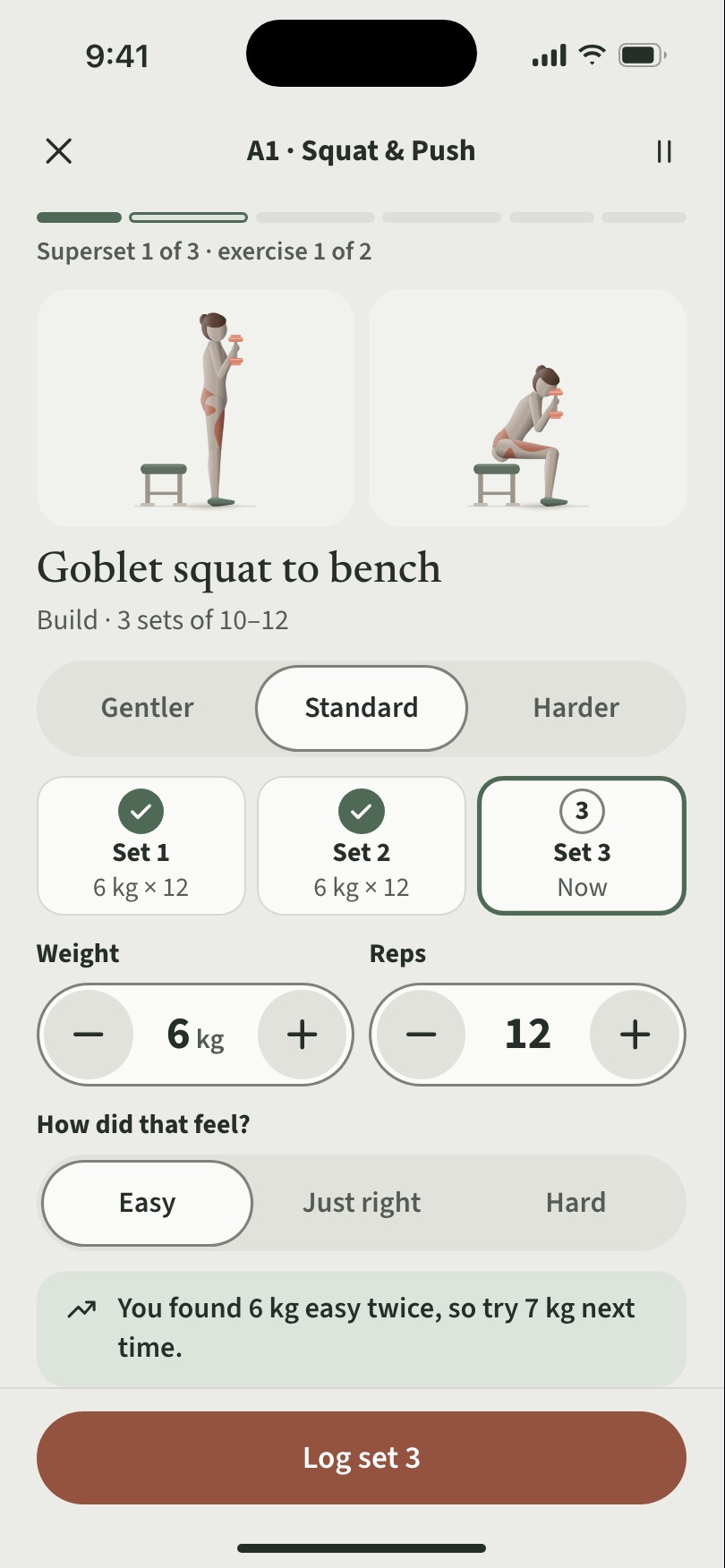
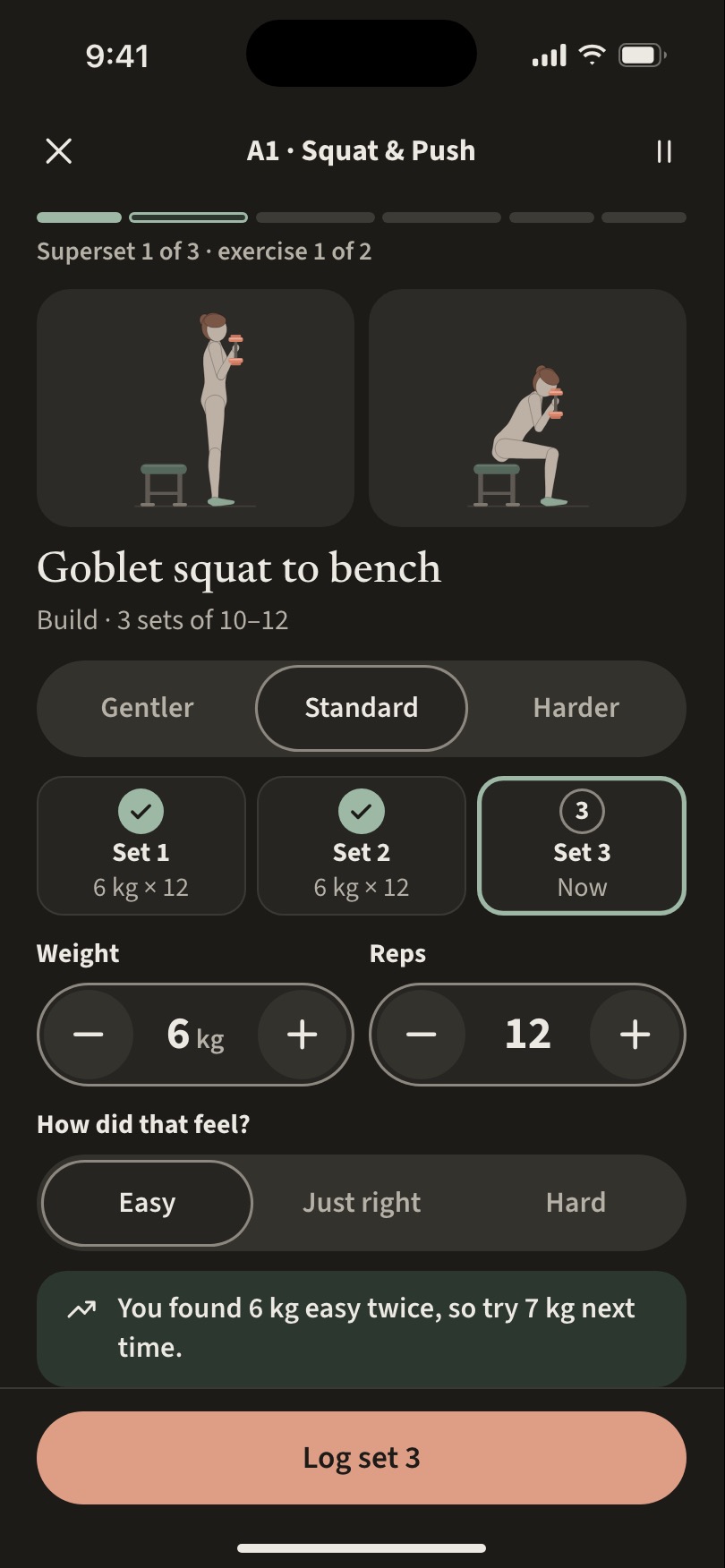
For perimenopause, menopause and beyond. Open the app and it tells you what to do next, one exercise at a time.
Wherever you are in menopause, the plan meets you there. Your warm-up and starting weights are set from a few simple questions.
Periods changing, symptoms starting. Strength exercise is something you can start now.
When a lot seems to shift at once, two steady sessions a week give you a routine to hold on to.
Strength exercise helps keep your bones and muscles strong in the years ahead.
It’s not too late to get stronger. Gentler starting points, with balance and everyday strength built in.
New to weightsEvery move is drawn and explained, and you start light.
Coming back after a breakPick up at your own level, not where you left off years ago.
Not a gym personYou don’t need to love the gym, or even go to one. Home works too.
Strength exercise is something the NHS recommends for adults at every age. Here’s why, in plain words.
BonesBone loss can speed up after menopause, when oestrogen falls. Strength exercise helps protect your bones.
MuscleStrength exercise helps you keep your muscle.
Long-term healthRegular activity is linked to a lower risk of type 2 diabetes, heart disease and stroke.
Mood and sleepBeing physically active can lift your mood and help you sleep better.
Staying independentStrength and balance exercise supports everyday movement, like getting up from a chair or taking the stairs.
Balance and fallsStrength and balance exercise can reduce your chance of falling.
Heart and brainRegular physical activity is linked to a lower risk of heart disease, stroke and dementia.
ConfidenceStrength and balance exercise can help you feel more confident on your feet.
UK guidance recommends muscle-strengthening activity on at least two days a week. Tervala is built around that.
Open the app, do the next session, and tell it how each set felt. Tervala handles the plan, the order and the weights.
LearnWeeks 1–2
BuildWeeks 3–6
StrengthenWeeks 7–10
Easy weekWeek 11
The working muscles are shown in clay. Every exercise has a gentler and a harder version, one tap away.
The same four sessions, the same sets and the same weekly goal. Only the equipment changes. Set each session to Gym or Home, and mix them as you like.
Machines, benches and dumbbells, with clear set-up notes. Good for building steadily heavier over time.
A chair, a stair, a band in the door. Every gym move has a home version that works the same muscles.
DumbbellsOne adjustable pair, or two fixed pairs (a lighter and a heavier)
A long loop resistance bandWith a door anchor. No band? Dumbbell moves can stand in.
A sturdy chairWithout wheels
A step, or the bottom stair
A matFor the floor exercises
You can start today with what’s already in the house:
It works to get going. To keep progressing you’ll want proper dumbbells, because bottles and bags run out of weight quickly.
Tervala is new, so there are no reviews to show you yet. These are real screens from the app instead.
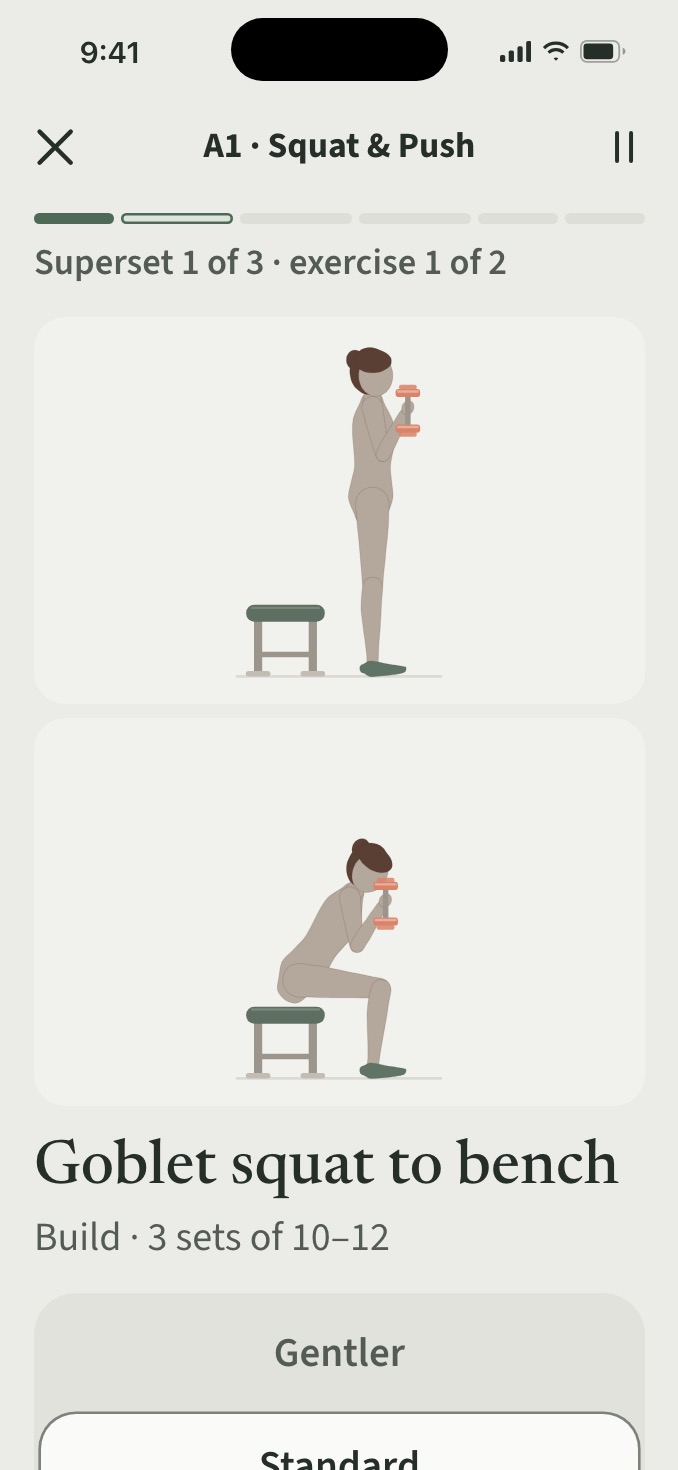
One exercise at a time, drawn step by step. Log each set with two taps.
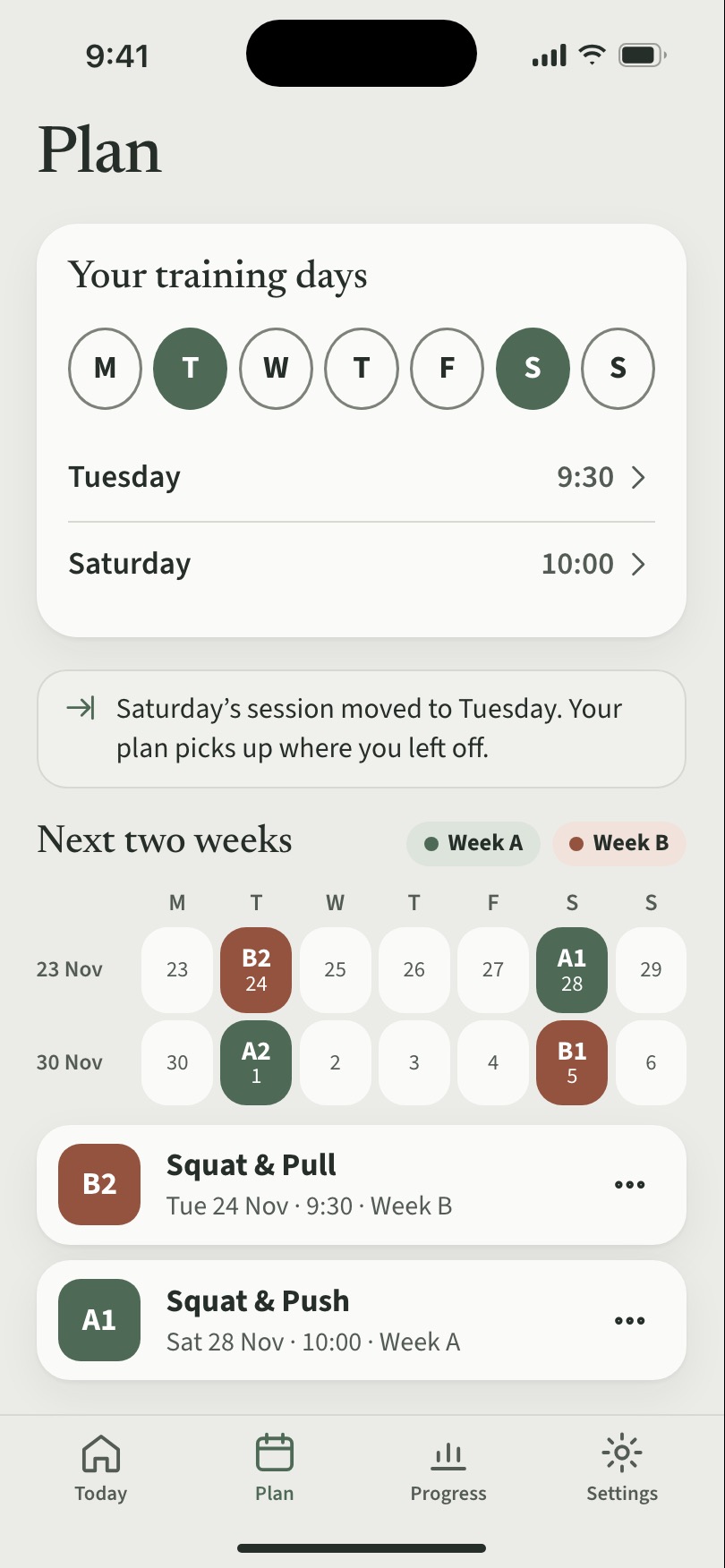
Choose your days and times. Missed one? It moves forward and the plan picks up where you left off.
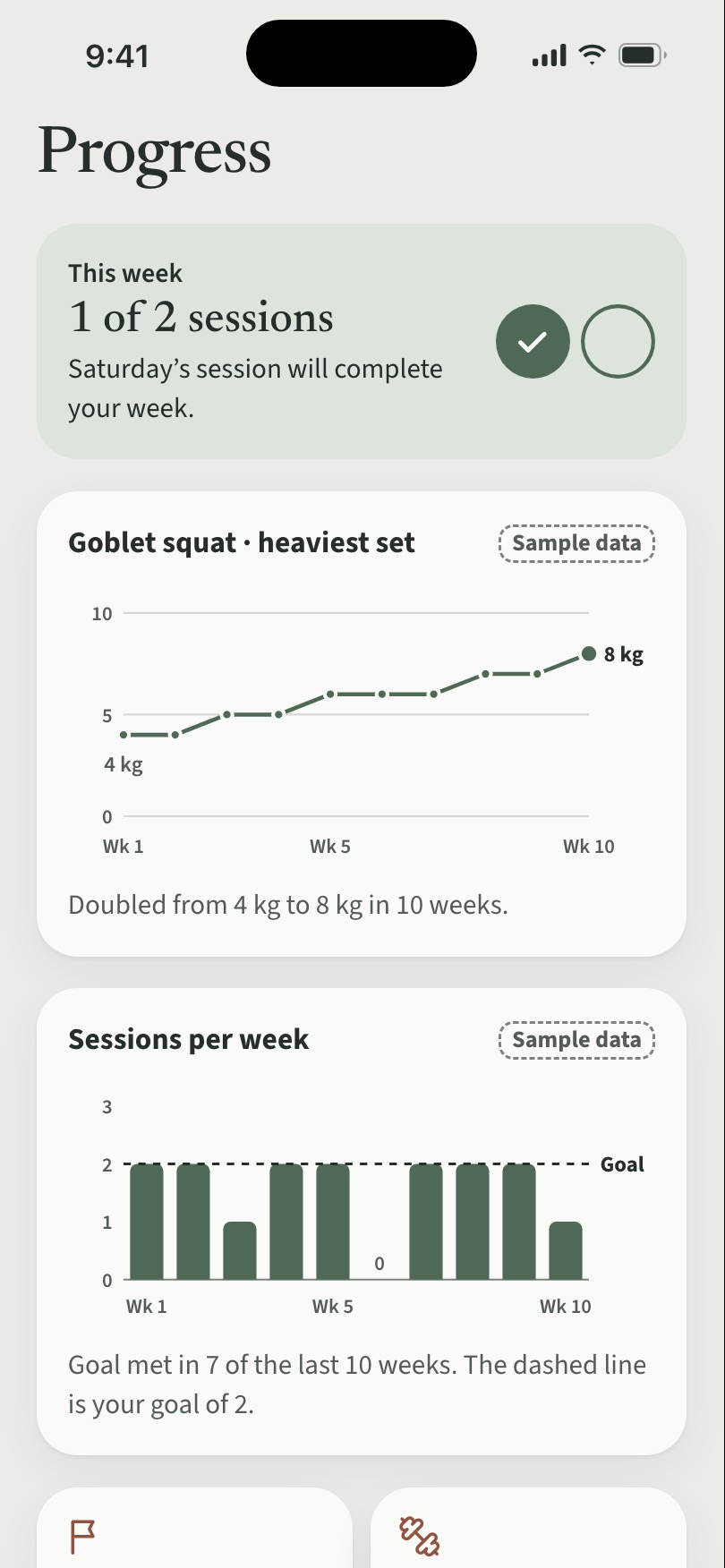
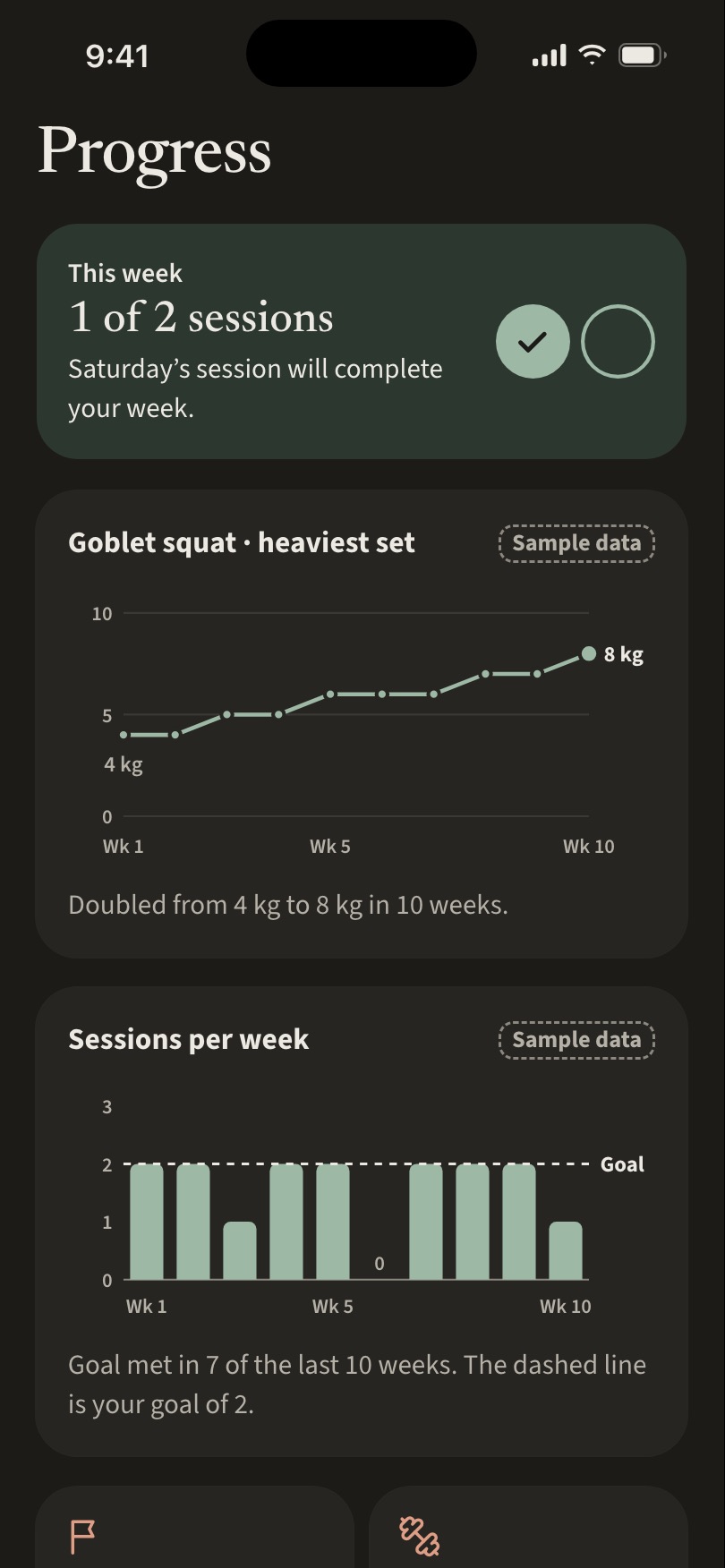
A weekly goal of two sessions, and your weights going up over time.
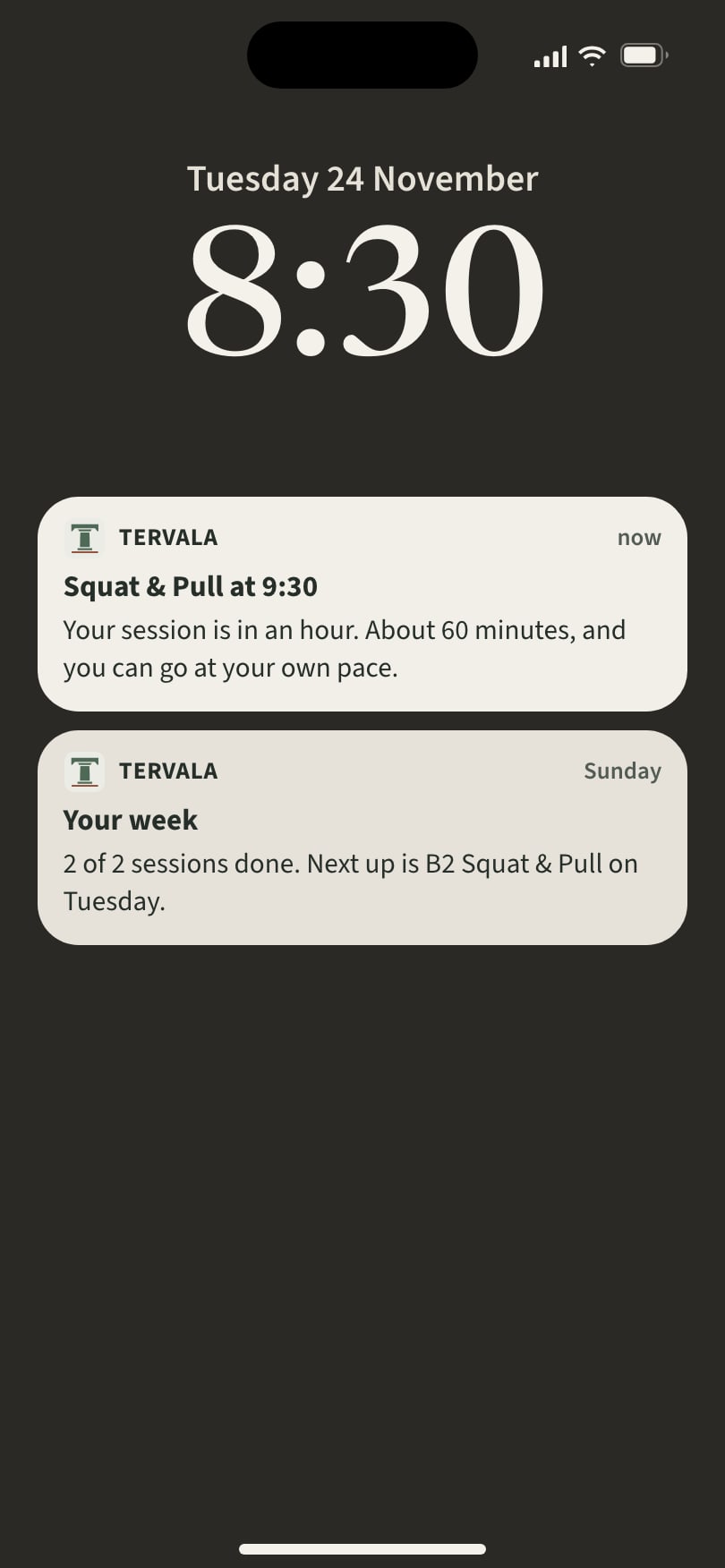
A nudge an hour before, and a short Sunday summary. Quiet overnight, and easy to turn off.
Readable at arm’s length in the gym. It follows your iPhone’s text size, right up to the largest Dynamic Type settings.
No flashing, no leaderboards, no shouting. Quiet colours and one clear next step.
Designed so your logs stay on your phone and in your own iCloud. Optional measurements are seen only by you.
Every move has an easier and a harder version, so sore days and strong days both have a place.
Start with a free sample session. If you choose the yearly plan, your first 14 days are free.
£9.99 a month
£59.99 a year
Works out at £5 a month.
£149.99 once
Free sample session. Try one full guided session, with logging, before you choose a plan.
Subscriptions are handled by Apple through your Apple ID, and you can cancel in your iPhone’s Settings at any time.
Join the launch listStrength exercise is recommended for adults, and the plan starts light. The NHS advises speaking to your GP first if you haven’t exercised for some time, or if you have a medical condition or concerns. That includes:
The app asks about these when you set up. Tervala is general guidance, not medical advice.
No. The first two weeks are about learning the moves with light weights, at an effort of about 6 out of 10.
There’s no jumping unless you choose it. Breathe out on the effort and avoid holding your breath. If you notice leaking, a feeling of heaviness, or a bulge, lower the weight and see your GP. They can refer you to a pelvic health physiotherapist.
For sore joints, every move has a gentler version, and you can stay with it as long as you like. Stop and get advice if you have sharp joint pain.
Either, or both. Each session can be set to Gym or Home on its own. At home you’ll want dumbbells, a band, a sturdy chair, a step and a mat, but you can start with water bottles and a backpack.
It moves forward to your next training day, and the plan picks up where you left off. There are no streaks to lose and nothing to catch up on.
Yes, at any time, in your iPhone’s Settings under your Apple ID. If you cancel at least 24 hours before the 14-day free trial ends, you won’t be charged. Lifetime is a single payment, with nothing to cancel.
No spam, and you can unsubscribe at any time.